
🗺️ Sitemap
A list of all the posts, pages and collections on this site.
📄 Pages
📝 Blog Posts
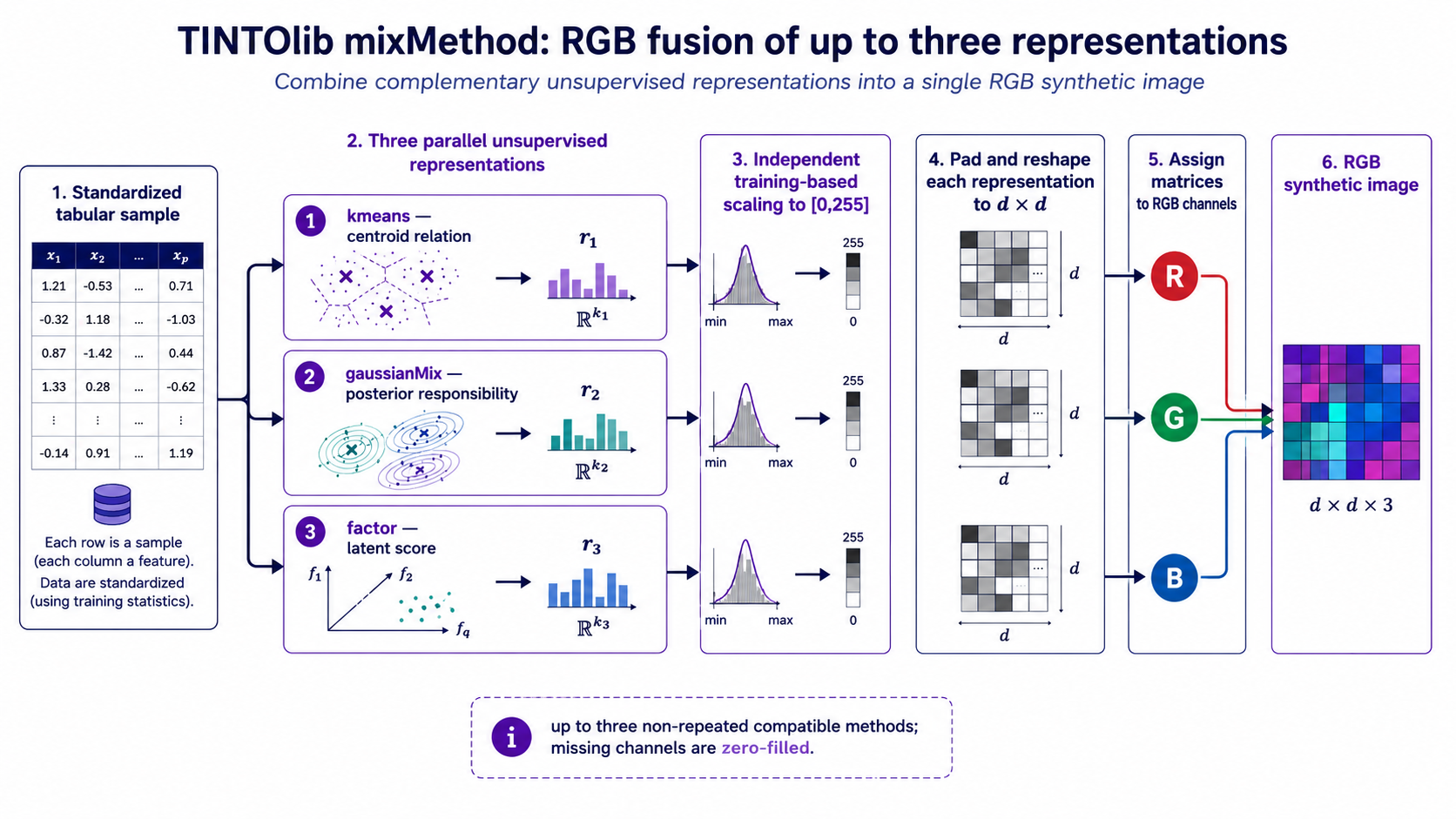
Part 4 — RGB Fusion and Structural Stability in TINTOlib: mixMethod and SSIM-Based Automatic Selection
Actualizado:
Learn how TINTOlib combines complementary unsupervised representations across RGB channels with mixMethod and how SSIM can be used to select a structurally stable number of clusters.
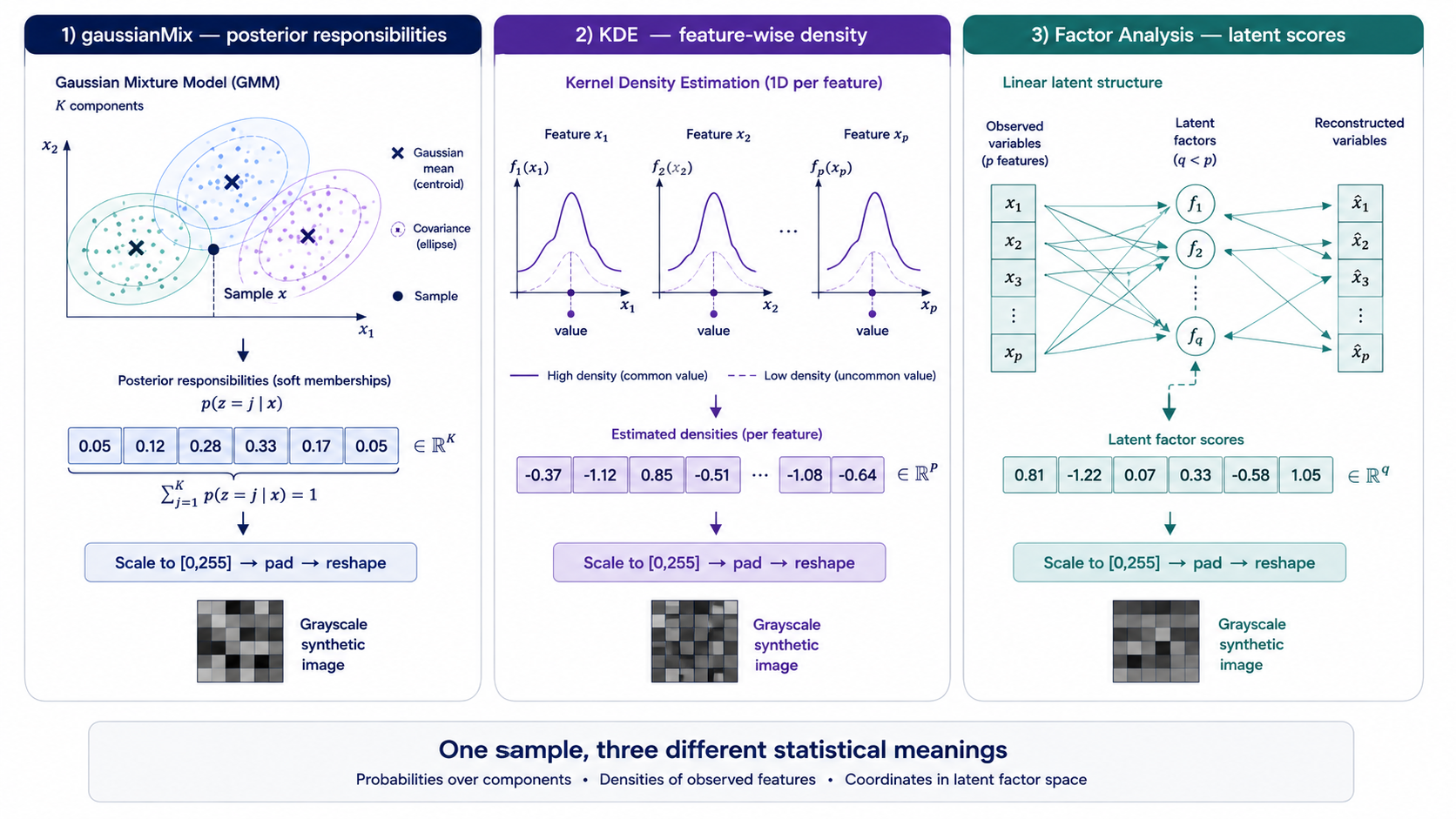
Part 3 — Probabilities, Densities and Latent Factors in TINTOlib: gaussianMix, KDE and Factor Analysis
Actualizado:
Learn how gaussianMix, KDE and Factor Analysis transform tabular samples into grayscale synthetic images through membership probabilities, density estimates and latent-factor scores.
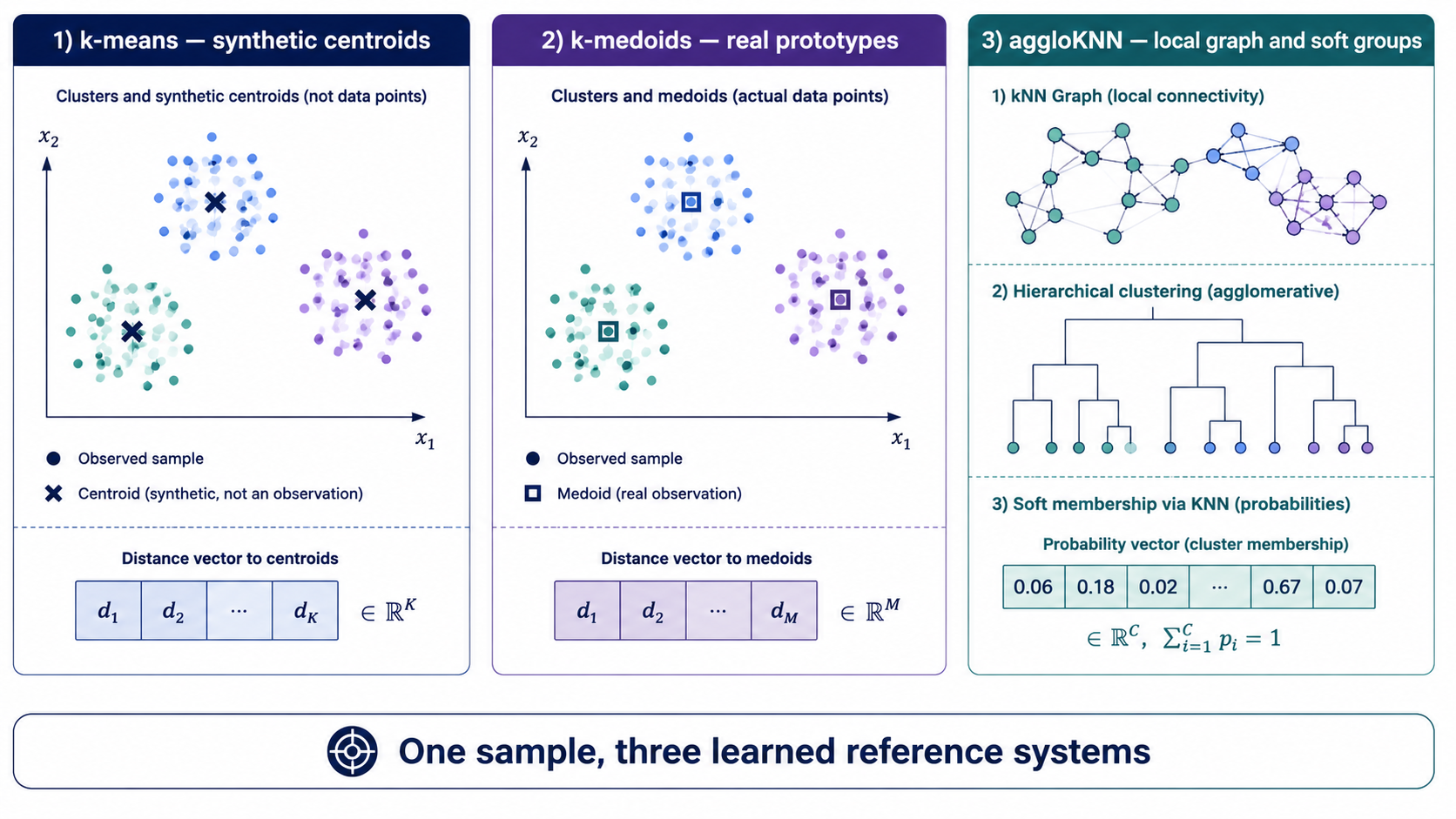
Part 2 — Distance-Based Encodings in TINTOlib: k-Means, k-Medoids and aggloKNN
Actualizado:
Learn how k-means, k-medoids and aggloKNN convert relationships between tabular samples into grayscale synthetic images, including distance metrics, reference ordering and RBF smoothing.
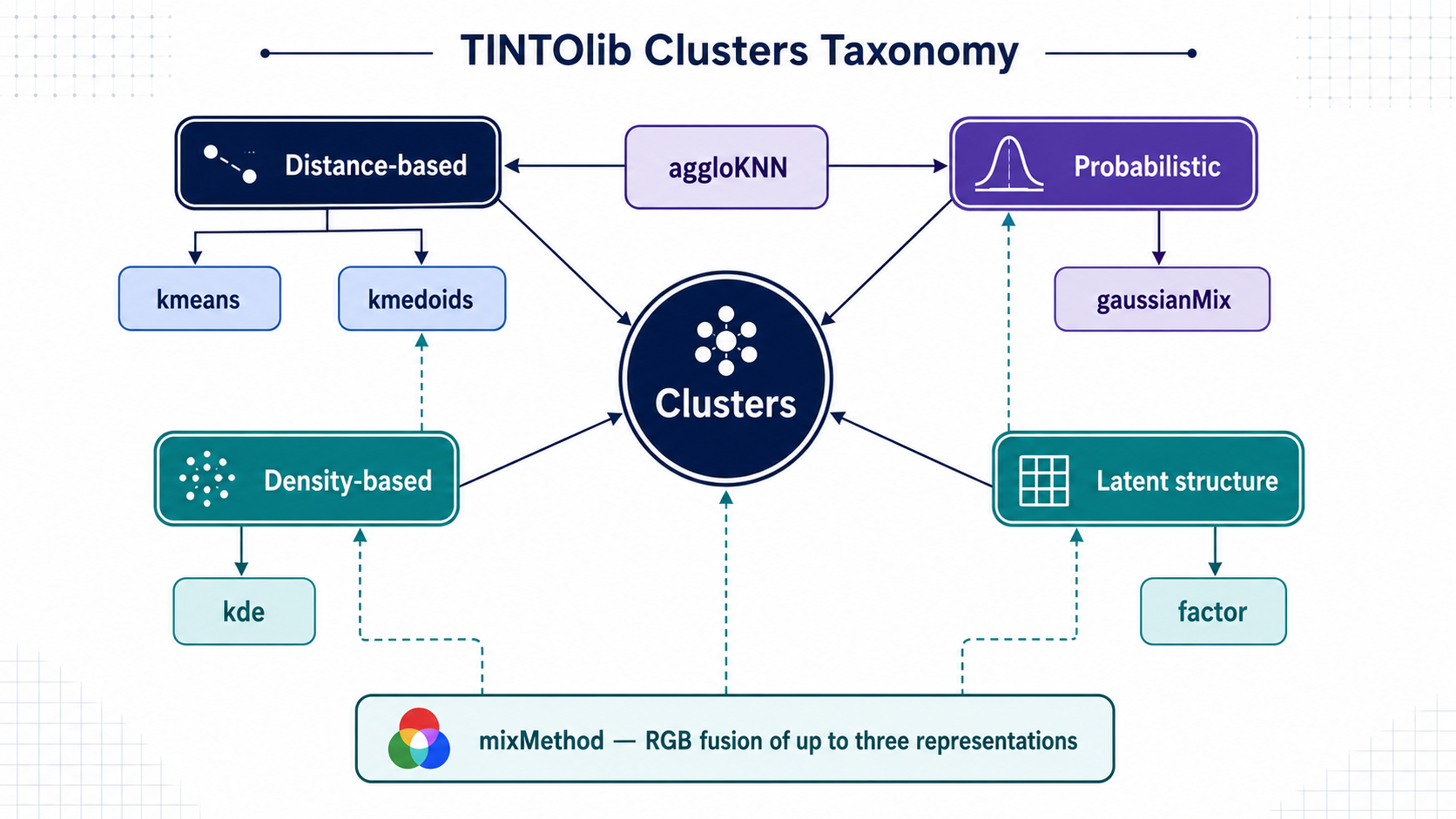
Part 1 - From Clusters to Pixels: Unsupervised Synthetic Image Generation in TINTOlib
Actualizado:
Learn how the new TINTOlib Clusters method converts distances, membership probabilities, density estimates and latent factors into synthetic images for vision-based deep learning.
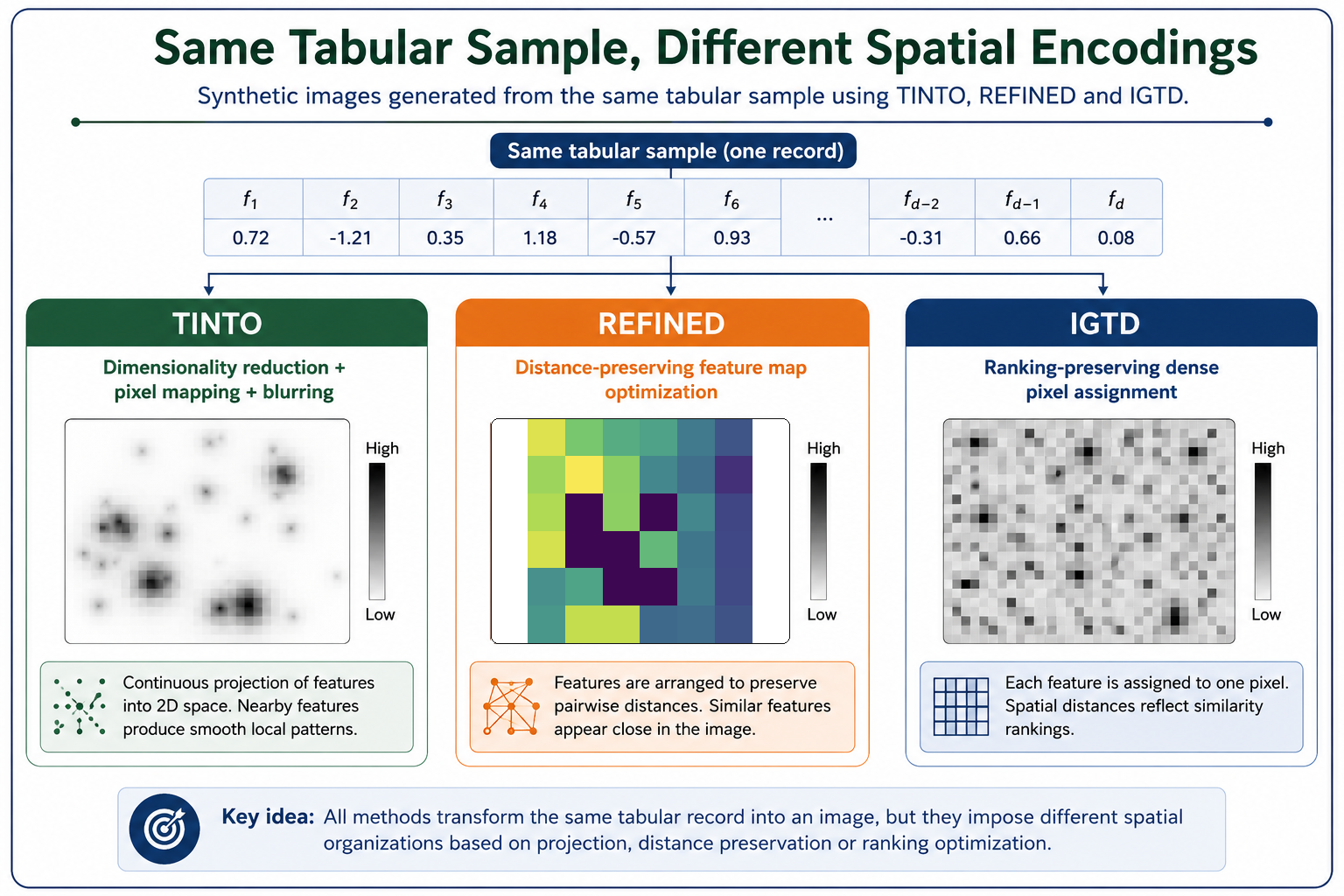
TINTO vs REFINED vs IGTD: Comparing Tabular-to-Image Methods in TINTOlib
Actualizado:
A practical and methodological comparison of TINTO, REFINED and IGTD for transforming tabular data into synthetic images and applying vision-based deep learning models.
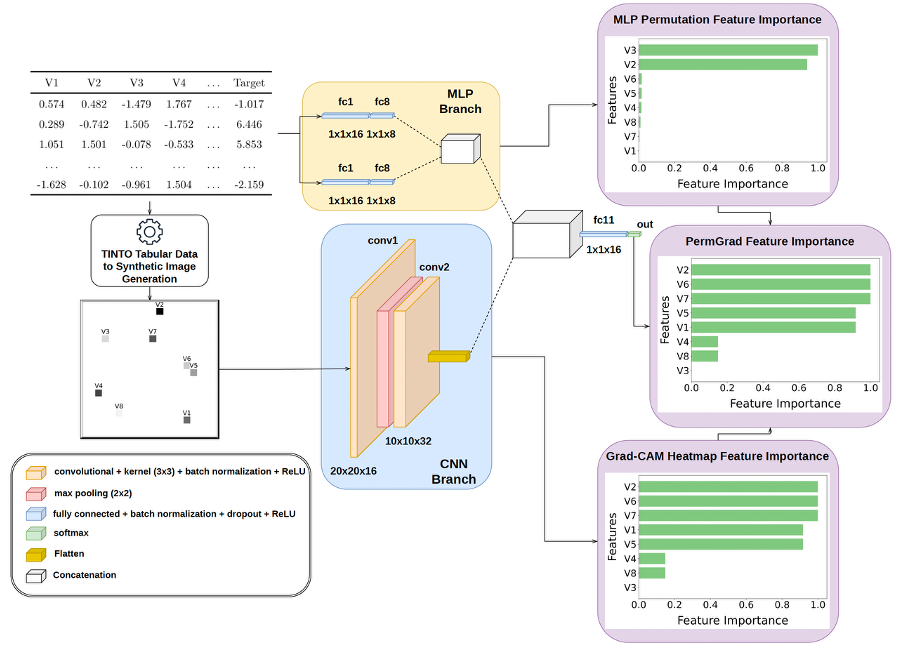
Improving Deep Learning by Exploiting Synthetic Images — Part II: From Synthetic Images to Hybrid Neural Networks
Actualizado:
How TINTOlib transforms tabular data into synthetic images, which spatial encoding methods should be preferred, and how hybrid neural networks and explainable AI complete the modelling pipeline.
Improving Deep Learning by Exploiting Synthetic Images — Part I: Why Tabular Data Needs Spatial Representations
Actualizado:
Why deep learning still struggles with tabular data, and why synthetic image representations provide a promising bridge between structured data and computer vision architectures.
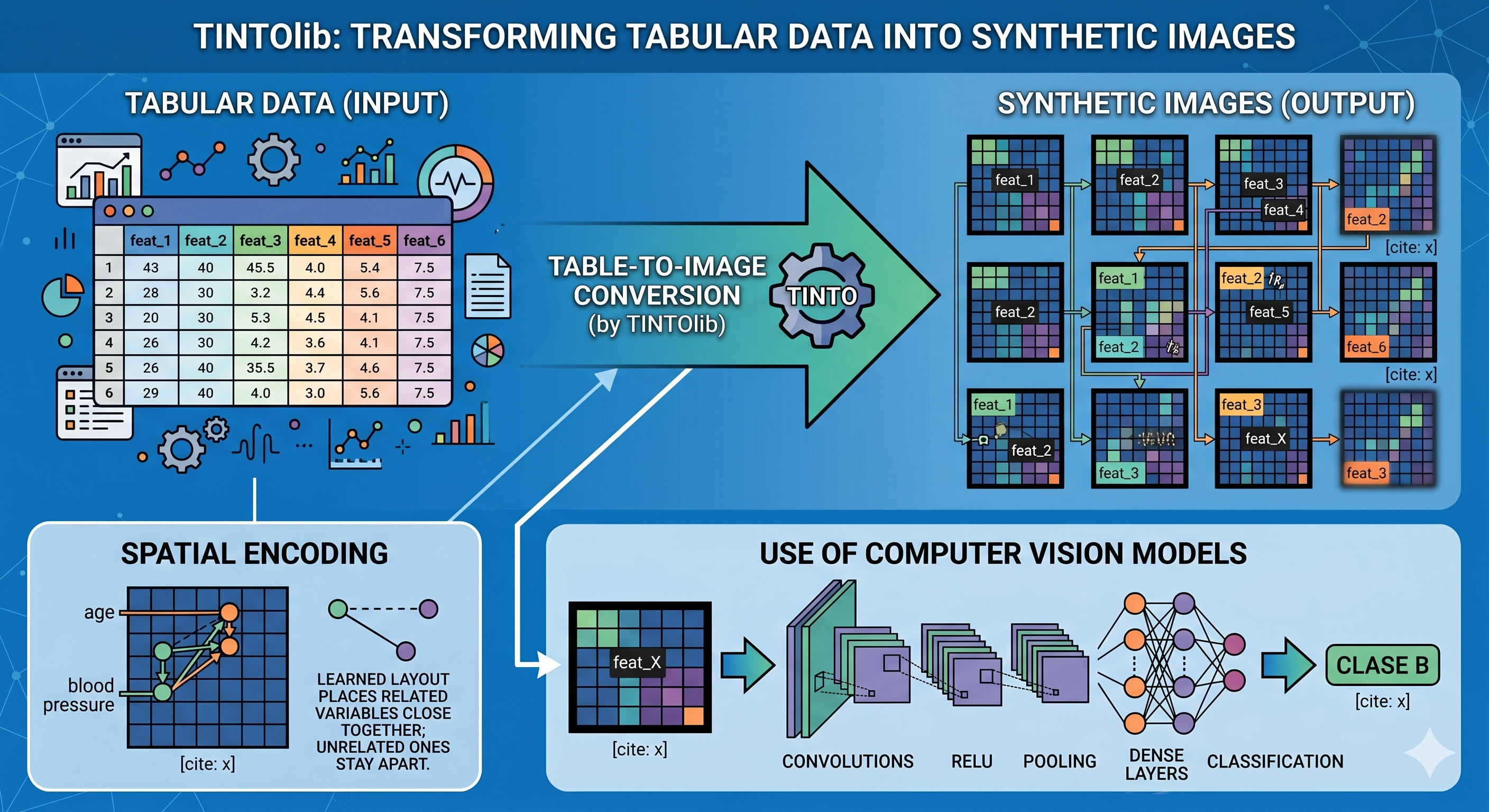
What is TINTOlib and why should we transform tabular data into synthetic images?
Actualizado:
An introduction to TINTOlib: why tabular data requires spatial encoding, how to generate synthetic images avoiding data leakage, and a complete end-to-end CNN pipeline in PyTorch.
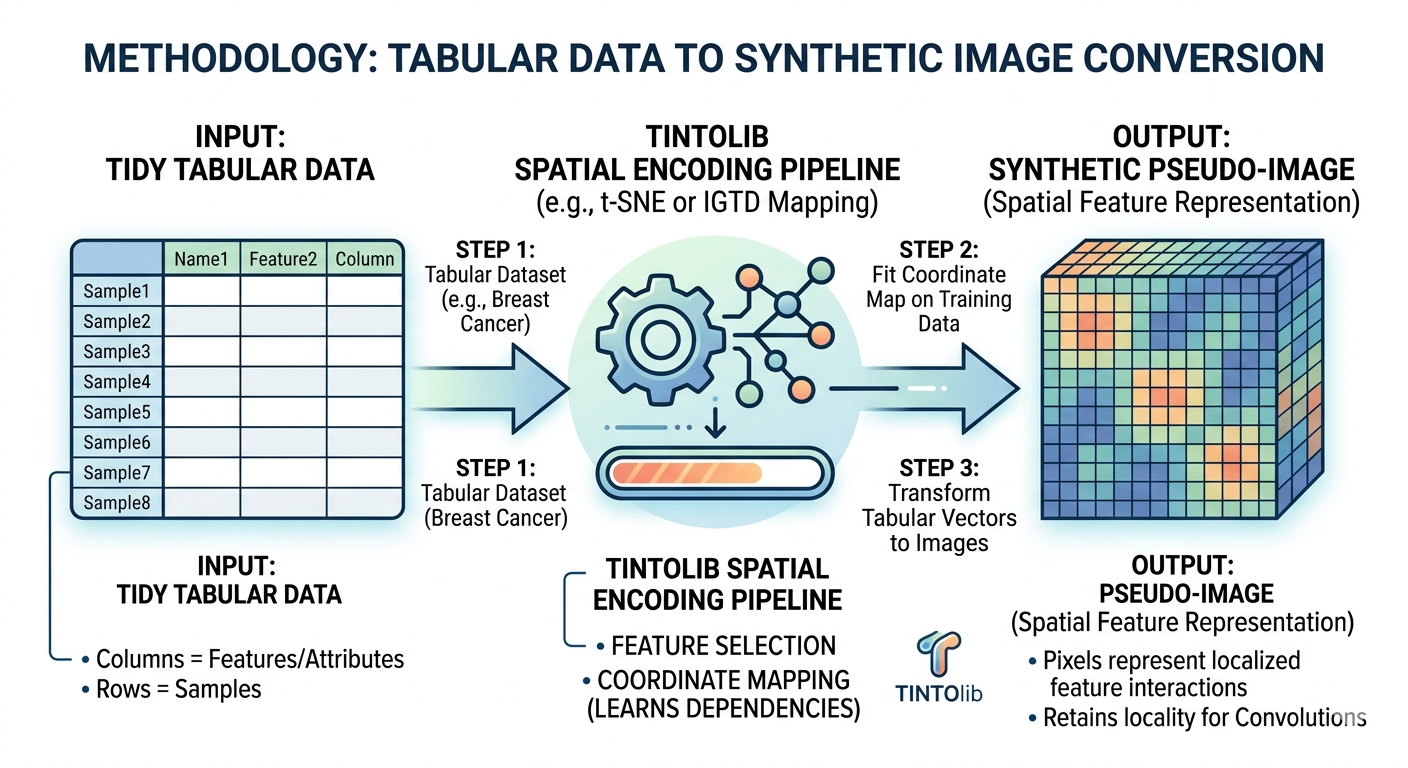
Introduction to TINTOlib: Unlocking the Power of Vision Architectures for Tabular Data
Actualizado:
Technical introduction to TINTOlib, a Python framework for transforming tabular data into synthetic images and applying CNN-based deep learning architectures.
📦 Collections
<h2 style="margin-top: 2rem;">📁 Libros-software</h2>
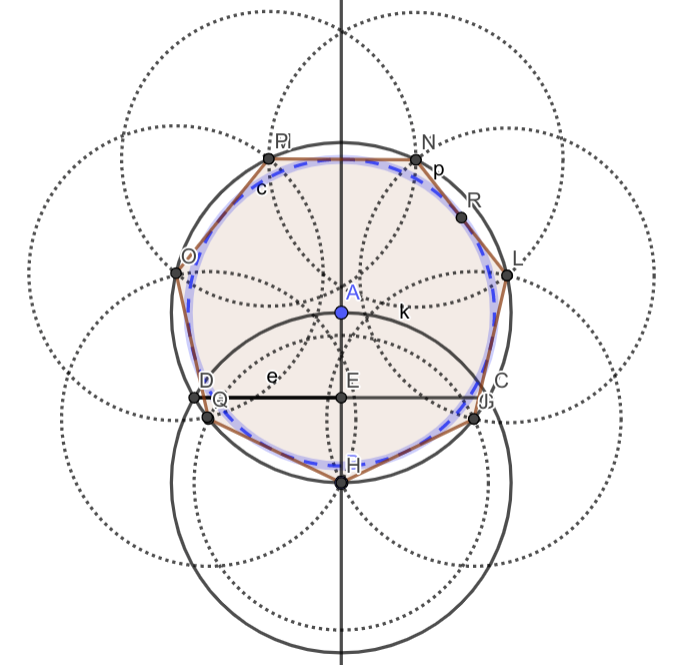
GeoGebra en el Aula. Aplicaciones Matemáticas aplicadas al aula con GeoGebra
Libro práctico para aplicar GeoGebra en el aula con módulos de geometría, estadística, álgebra y análisis. Incluye acceso gratuito a un curso de Udemy y materiales descargables.
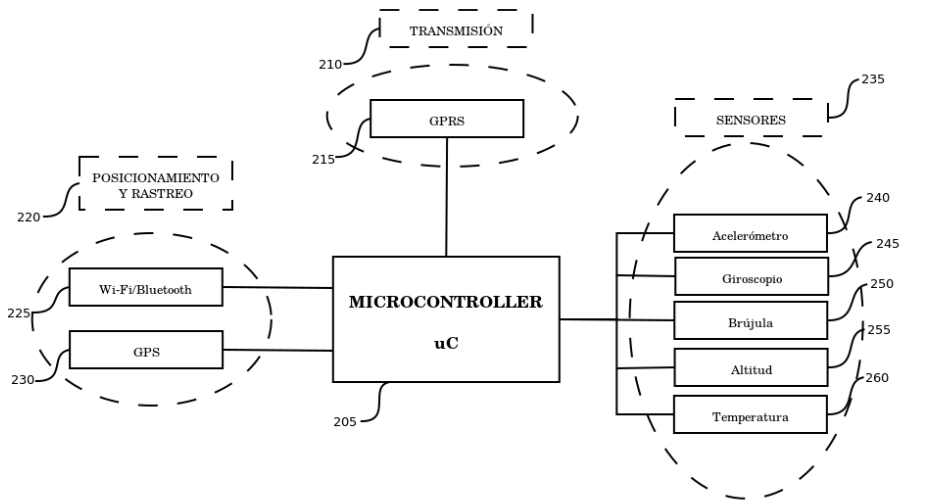
Electronic device for tracking and geolocating people or animals
Body-worn electronic device (bracelet/necklace) for indoor & outdoor tracking using GPS, Bluetooth/Wi-Fi and GPRS; includes sensors for power & information optimisation.

TINTO — Transform Tabular Data into Synthetic Images for Deep Neural Networks
Open-source framework to convert tidy tabular data into synthetic images (PCA, t-SNE, blurring) for CNN-based classification.
TINTOlib - Python library for transforming tabular data into synthetic images
TINTOlib is an open-source, user-extendable framework that offers new opportunities for users to convert tidy data into images through differents algorithmic methods.
  <h2 style="margin-top: 2rem;">📁 Publications</h2>


  <h2 style="margin-top: 2rem;">📁 Talks</h2>
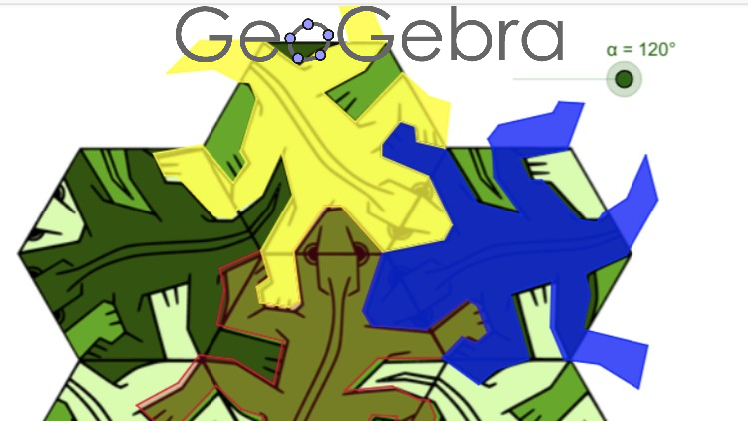
Aplicación de GeoGebra en el Aula. Desde cero hasta avanzado.
Actualizado:
Textos Científicos con LÁTEX. De 0 a Experto.
Actualizado:
Programación con el Lenguaje Estadístico R. De 0 a Experto.
Actualizado:
Machine Learning para Investigación con WEKA. De 0 a Experto.
Actualizado:
Deep Learning para Lenguaje Natural y Series Temporales en R.
Actualizado:
Deep Learning para visión por computador con R y Keras.
Actualizado:
Deep Learning para datos tabulares con R y Keras.
Actualizado:
Machine Learning con R. Data Analytics de básico a experto.
Actualizado:
Machine Learning con Python. Aprendizaje Automático Avanzado.
Actualizado:
Deep Learning con Python y Keras. Redes Neuronales avanzado.
Actualizado:
Deep learning con R y Keras. Redes Neuronales avanzado.
Actualizado:
Máster de Especialista en Ciencia de Datos con el Lenguaje R
Actualizado:
Máster de especialista en Ciencia de Datos con Python
Actualizado:
Máster Especialista en Machine Learning Ensemble con Python
Actualizado:
Máster Especialista de Deep Learning en Python con PyTorch
Actualizado:
Máster especialista en Optimización de Redes Neuronales con Python y Keras
Actualizado:
Máster de especialista en Procesamiento del Lenguaje Natural con Python
Actualizado:
Máster Especialista en Series Temporales - Forecasting con Python
Actualizado:
<h2 style="margin-top: 2rem;">📁 Teaching</h2>