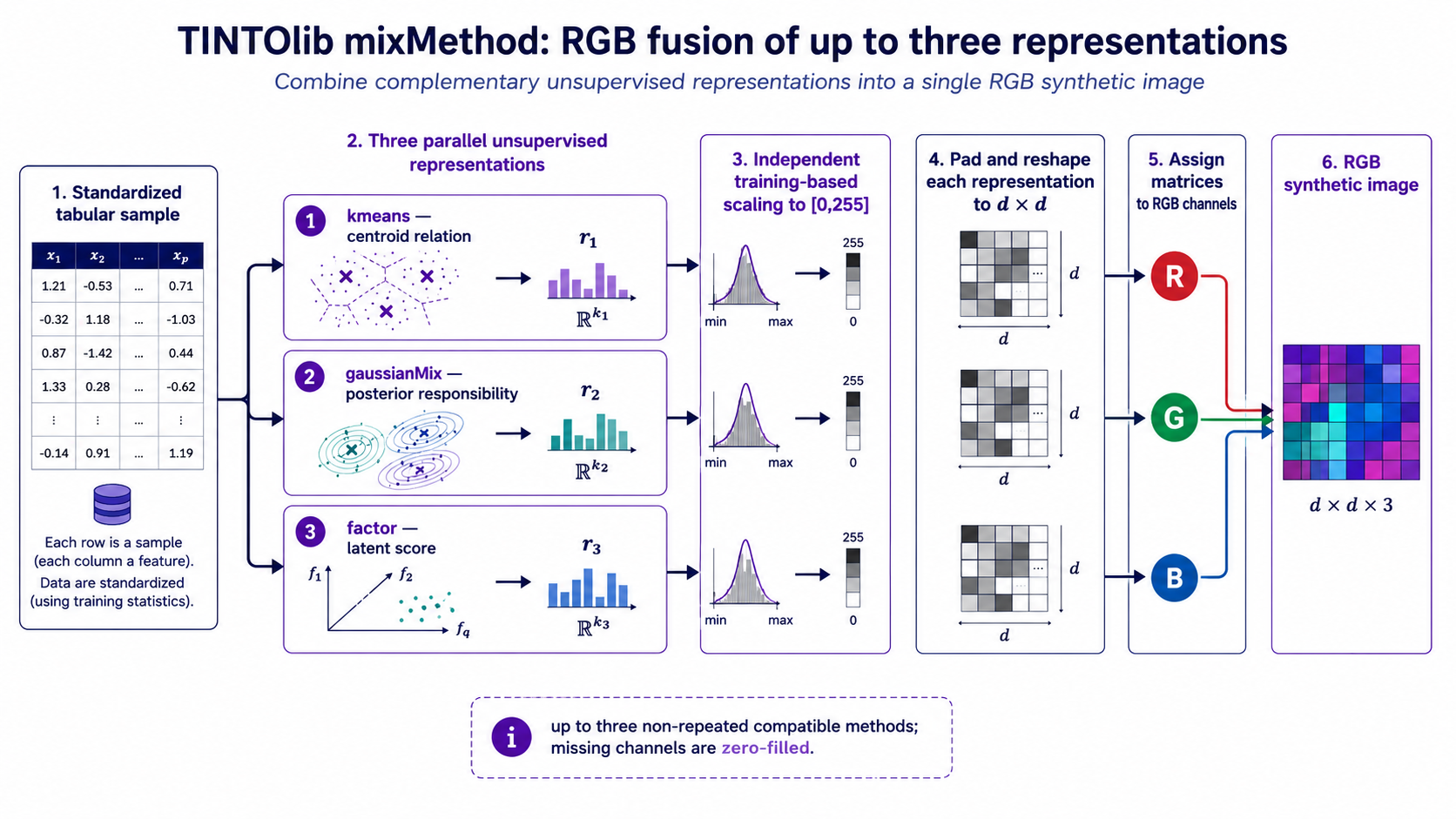
Part 4 — RGB Fusion and Structural Stability in TINTOlib: mixMethod and SSIM-Based Automatic Selection
Final tutorial in the TINTOlib Clusters series, covering RGB multi-view fusion with mixMethod, channel interpretation and autom...
Read article →
Technical tutorials, research notes and reproducible examples on TINTOlib, tabular-to-image transformation, synthetic image generation from tabular data, hybrid neural networks, explainable AI and applied deep learning.
By Manuel Castillo-Cara, PhD — Researcher and Professor at UNED, developer of TINTO and TINTOlib.
Final tutorial in the TINTOlib Clusters series, covering RGB multi-view fusion with mixMethod, channel interpretation and autom...
Read article →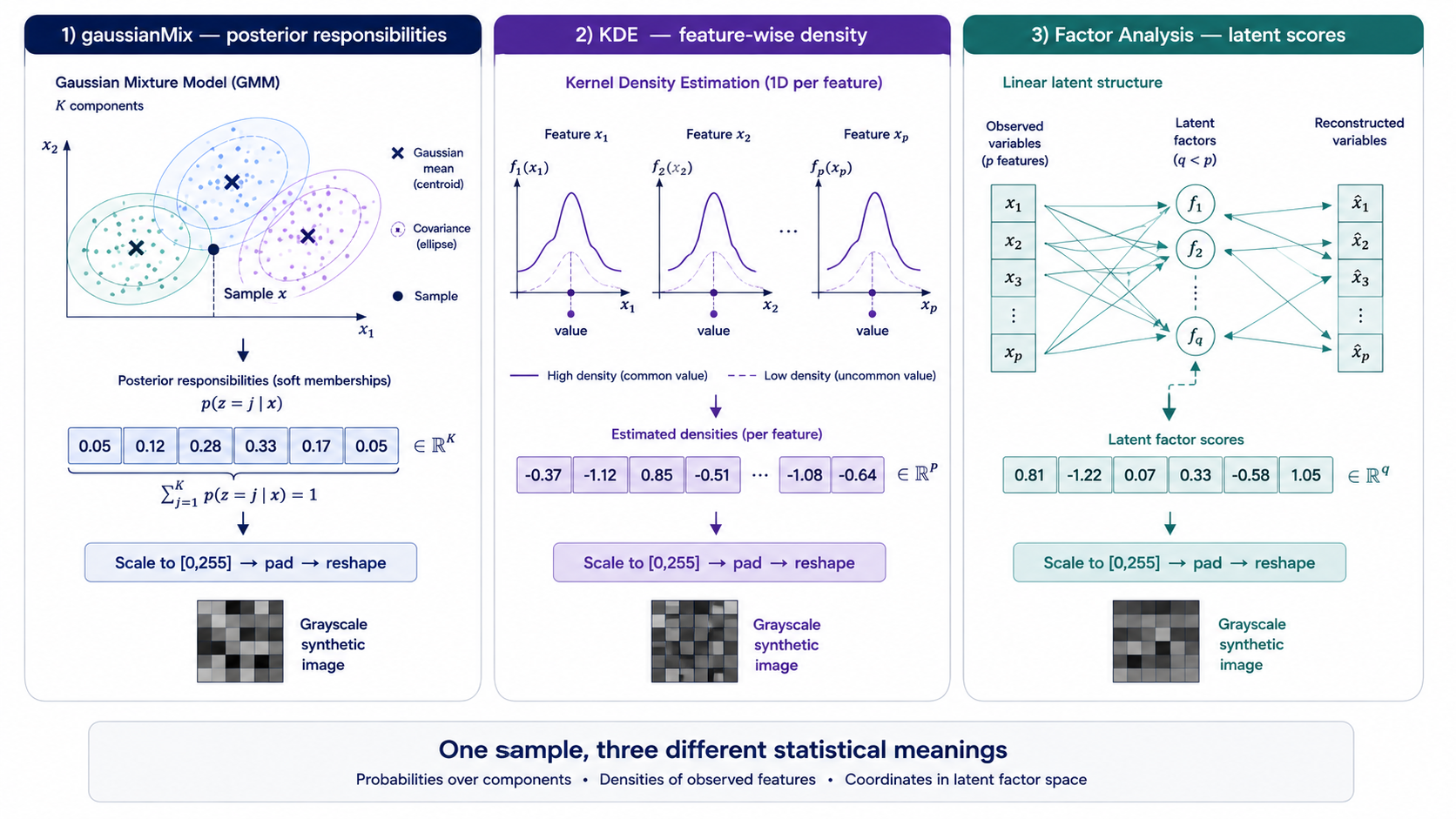
Technical tutorial on the probabilistic, density-based and latent representations available in TINTOlib's Clusters class: Gauss...
Read article →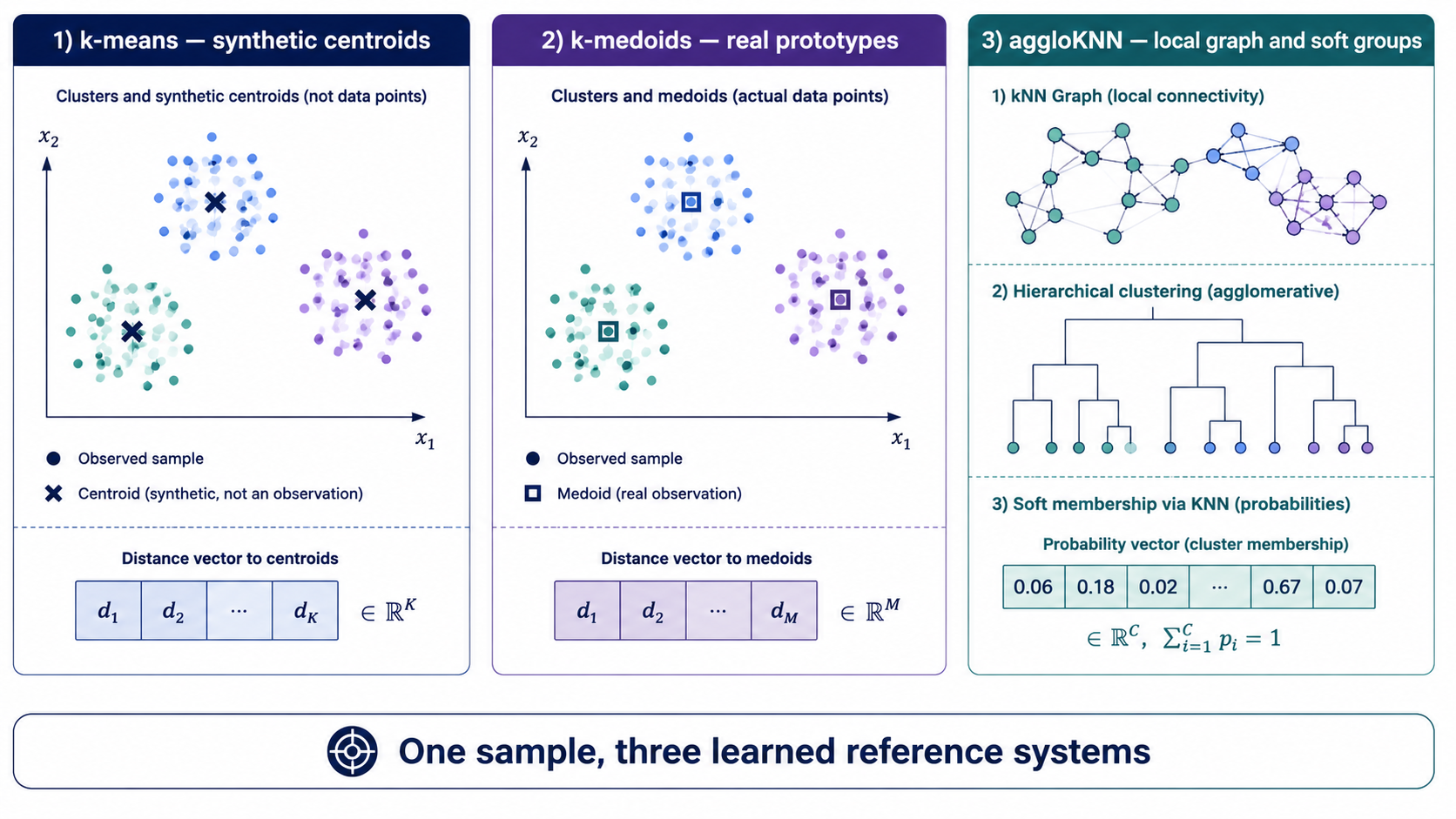
Technical comparison of the distance-based representations available in TINTOlib's Clusters class: k-means centroid distances, ...
Read article →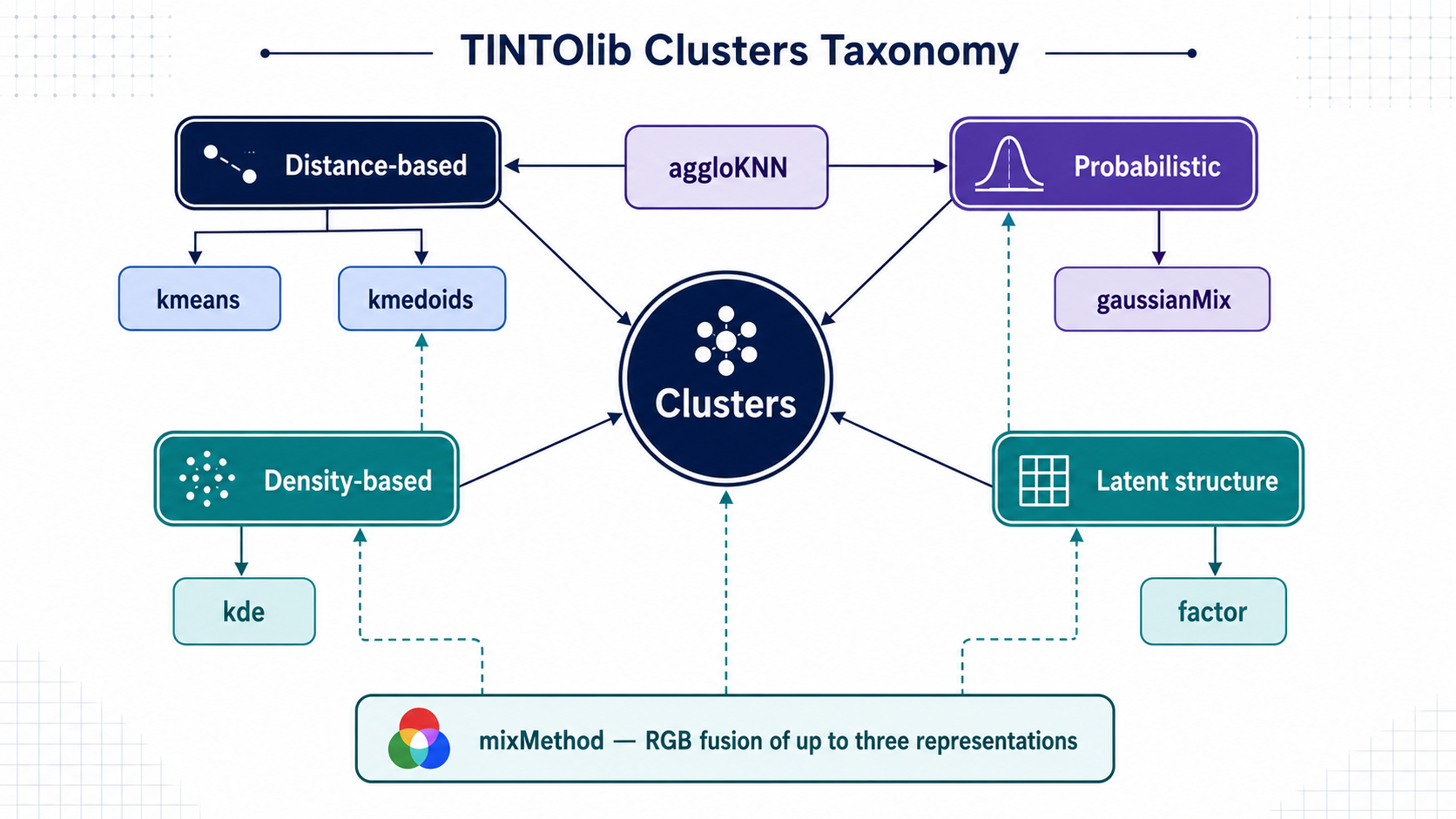
Technical introduction to the new Clusters method in TINTOlib, which transforms tabular data into grayscale or RGB synthetic im...
Read article →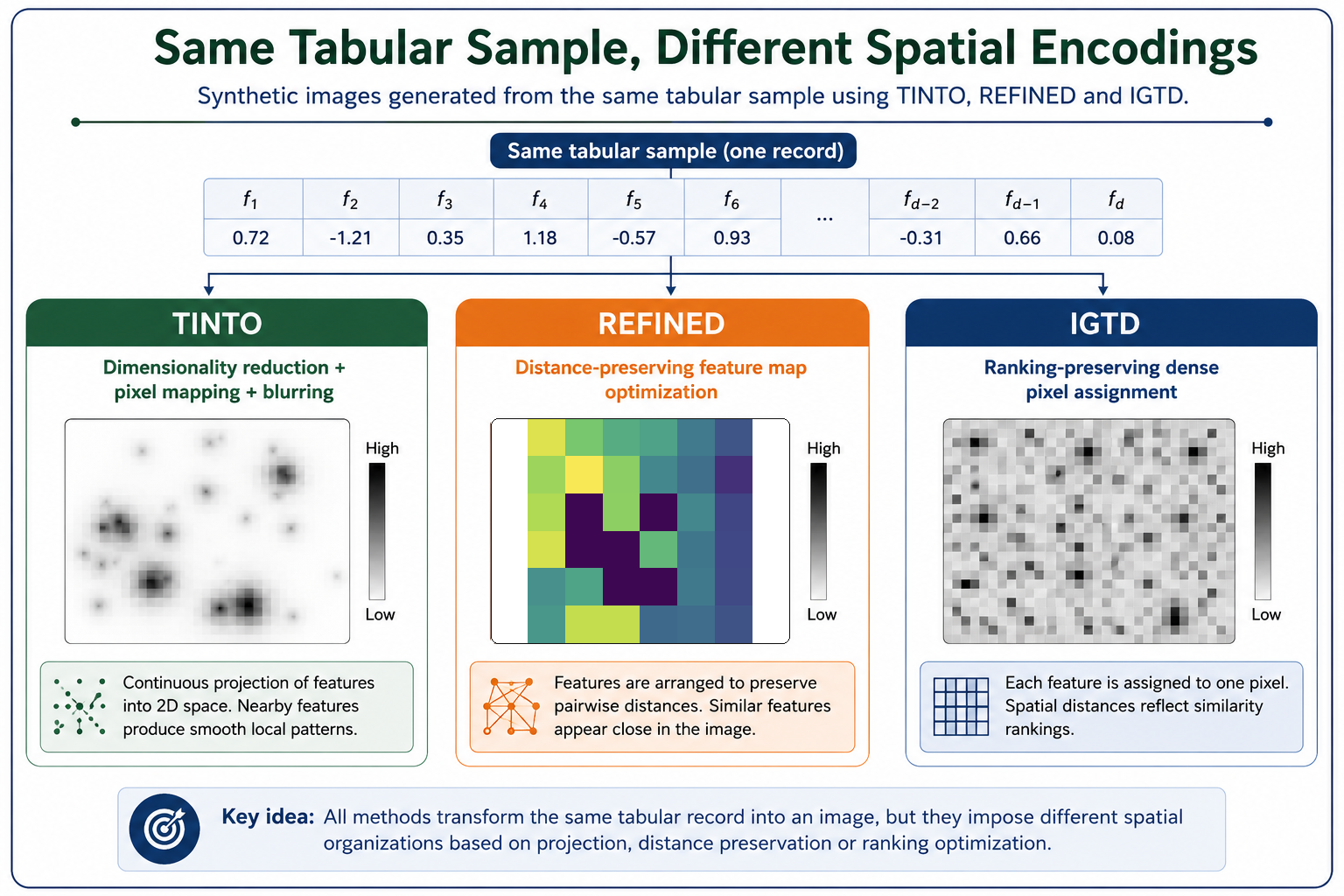
Comparative analysis of TINTO, REFINED and IGTD, three representative tabular data into synthetic image transformation methods ...
Read article →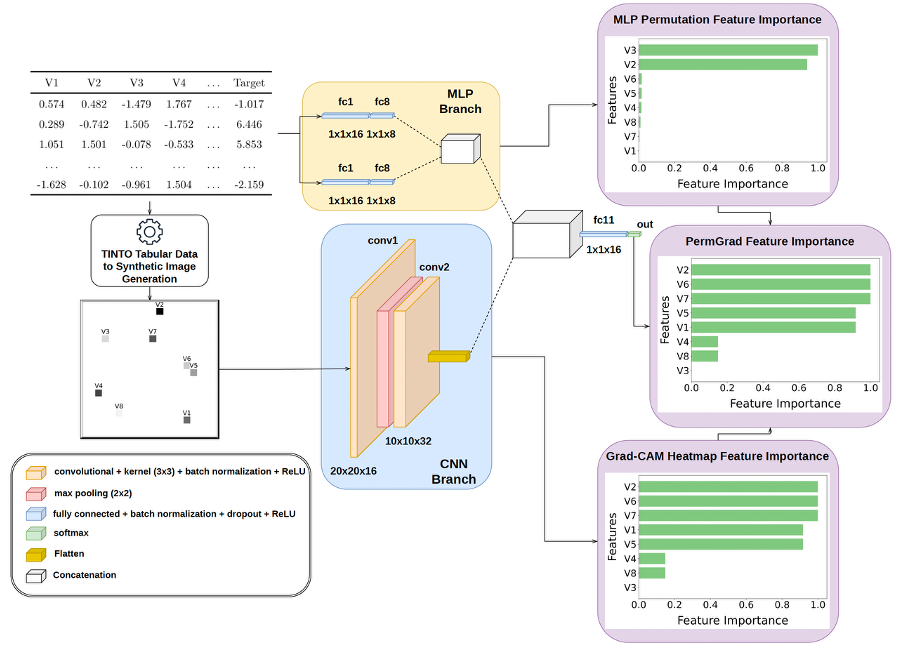
Part II of a theoretical and technical series on synthetic images for tabular data, focusing on TINTOlib, preferred spatial enc...
Read article →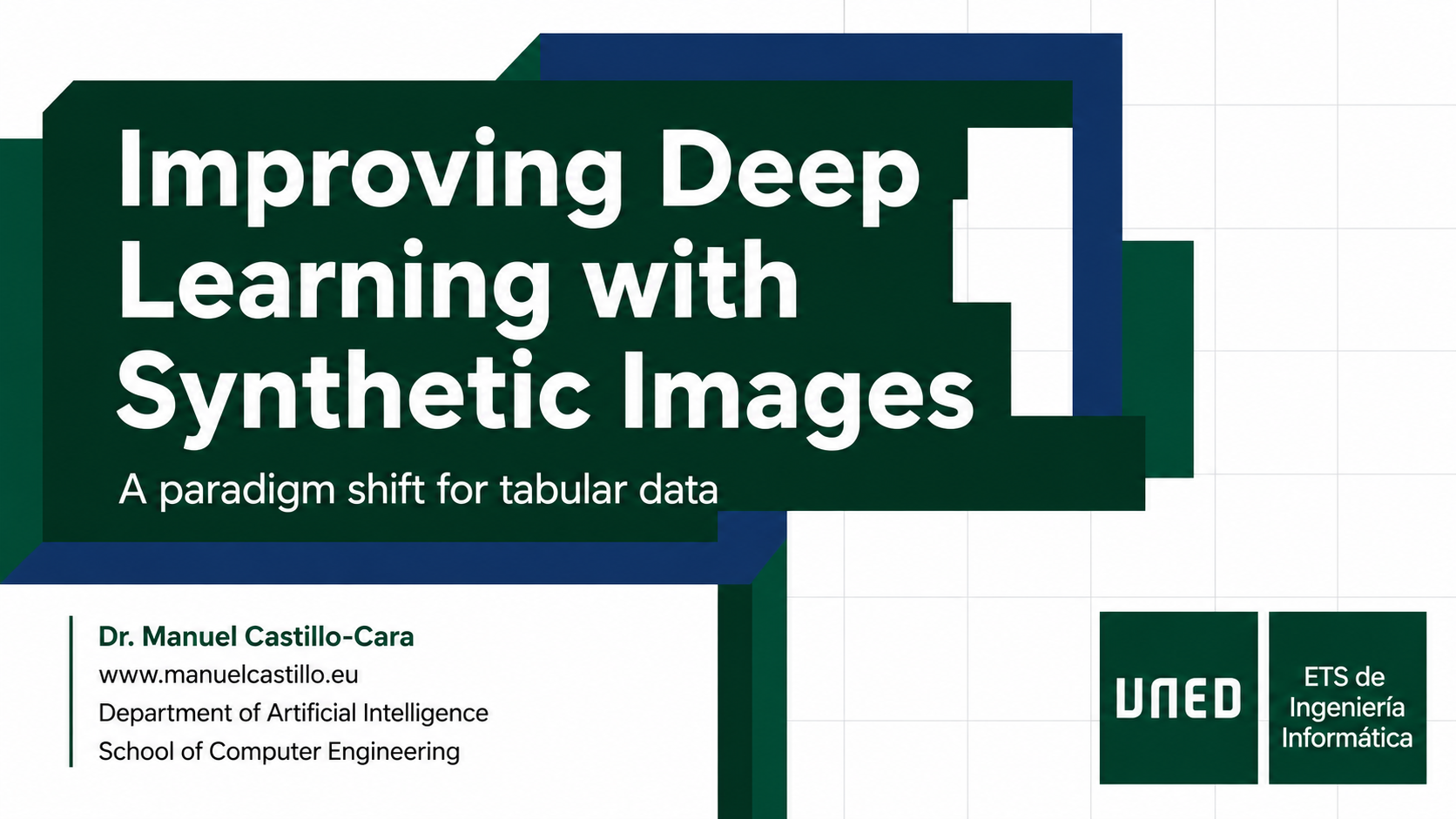
Part I of a theoretical and technical series on why deep learning still struggles with tabular data, and why synthetic image re...
Read article →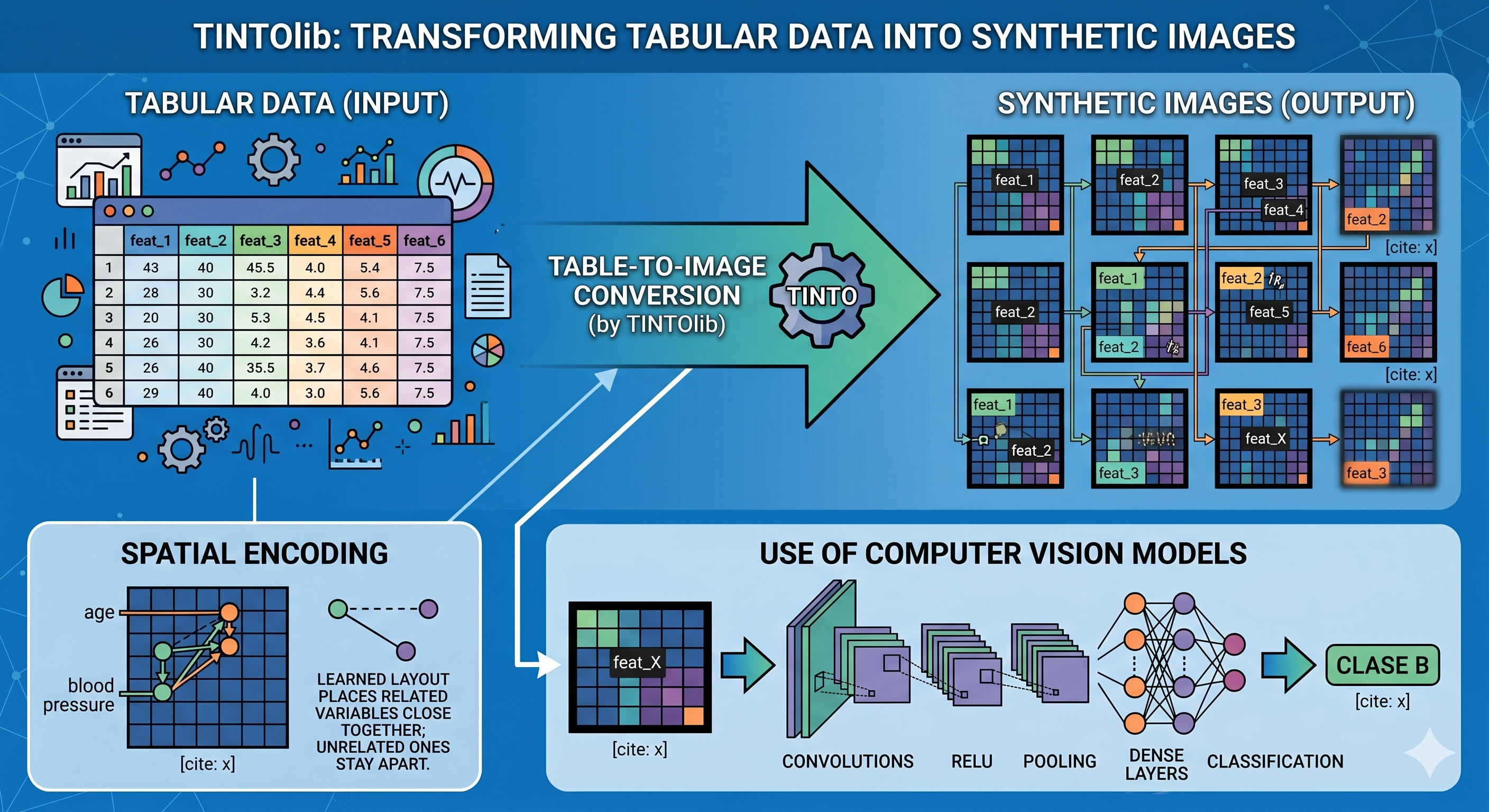
An introduction to TINTOlib: why tabular data requires spatial encoding, how to generate synthetic images avoiding data leakage...
Read article →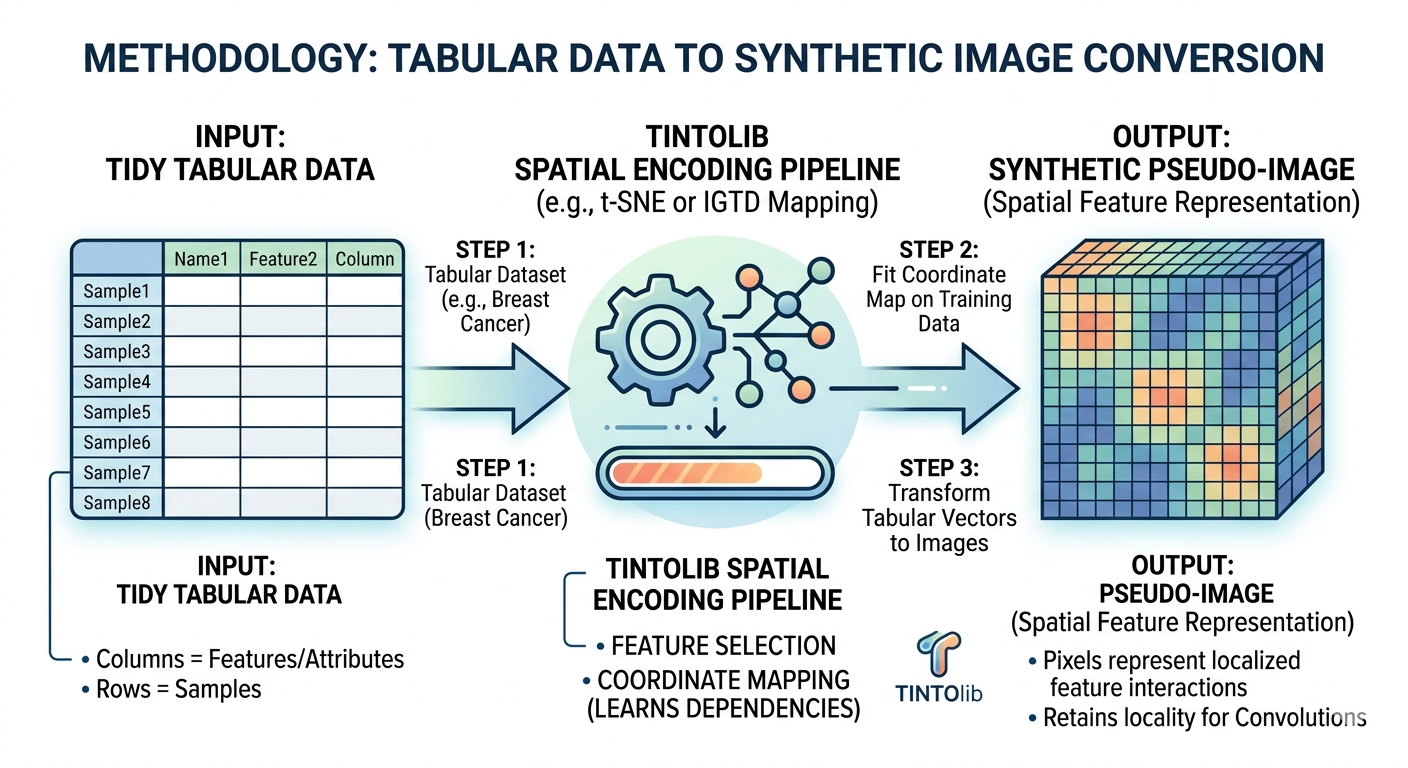
Technical introduction to TINTOlib, a Python framework for transforming tabular data into synthetic images and applying CNN-bas...
Read article →